Likee Live 2026: When Short Videos Become Trailers for the Main Show
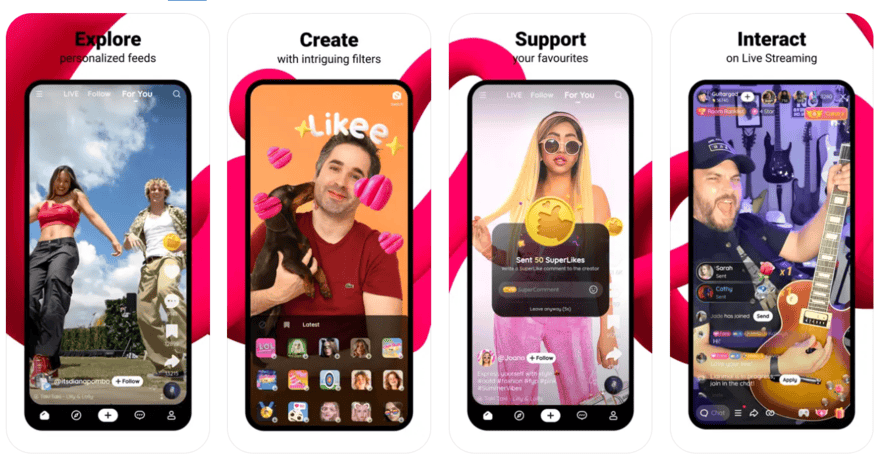
Likee Live 2026 sits at an interesting intersection between short-form entertainment and real-time broadcasting.
A creator can publish a visually polished clip in the morning, tease a challenge in the afternoon, host the full experiment live that evening, and turn the best moment into another short video the next day.
The short video attracts attention.
The livestream creates participation.
The highlight keeps the idea moving.
That makes Likee more than an endless collection of clips. For creators who use the platform strategically, it can operate like a small entertainment network where every short video promotes the next episode.
The difficult part is not pressing the live button.
It is turning rapid attention into a show people understand, participate in, and remember.
Creators also need to think carefully about:
- Virtual gifts
- Creator income
- Audience pressure
- Age requirements
- Copyright
- Privacy
- Recommendation systems
- Account security
- The difference between visibility and genuine community
At STREAM PSDDESAIN, we examine live platforms, creator tools, monetization systems, audience development, production quality, and safer broadcasting practices.
This guide explains how Likee combines short videos, creative effects, personalized discovery, livestreaming, and virtual support—and how creators can use that combination without producing a room that feels like one continuous request for Gifts.
What Is Likee?
Likee is a global short-video social platform developed by Singapore-based BIGO Technology.
The official Likee About page describes the platform as a worldwide short-video community where users can create, discover, and share content around different interests.
According to JOYY’s 2025 annual report, Likee provides:
- Short-video discovery
- Video creation tools
- Filters
- Special effects
- AI-supported personalized feeds
- Live broadcasting
- Virtual tipping
- Advertising-supported content
The company states that Likee has a presence across the Middle East, Europe, and Southeast Asia.
That geographic mix matters.
Creators may reach audiences from different:
- Languages
- Cultures
- Time zones
- Viewing habits
- Payment markets
- Community expectations
A format that works in one market may feel confusing or irrelevant in another.
Creators should build for a defined audience rather than attempting to speak to the entire world at once.
The Trailer-to-Show Model
The strongest way to understand Likee Live is through the Trailer-to-Show Model.
A short video acts like a trailer.
The live broadcast delivers the main event.
A follow-up clip provides the ending or strongest moment.
Imagine a creator testing three inexpensive lighting setups.
Short Video One: The Hook
Tonight I’m testing whether a desk lamp can beat a ring light. Viewers will choose the winner live.
This introduces the question.
The Livestream: The Full Show
The creator:
- Tests each light
- Explains the setup
- Answers questions
- Lets viewers score the result
- Reveals the final winner
Short Video Two: The Payoff
The cheapest light unexpectedly won. Here is the position that made the difference.
This gives people who missed the broadcast a useful result.
Short Video Three: The Next Question
Next, should we test a window, LED panel, or two desk lamps?
Now the previous broadcast promotes the next one.
This creates the Likee Content Loop:
Hook → Live participation → Highlight → Next hook
A creator does not need a completely new idea every day.
One well-designed experiment can generate several connected pieces of content.
Why Likee Live 2026 Still Matters
JOYY’s annual report states that Likee monetizes primarily through virtual tips connected to livestreaming and through advertising.
The same filing says Likee ranked as the United Arab Emirates’ tenth social application by in-app-purchase revenue during 2025, citing data.ai’s State of Mobile report.
That ranking shows that virtual spending remains commercially meaningful in at least one major Likee market.
It does not prove that:
- Every creator earns money
- Creator income is predictable
- Gifts are distributed evenly
- A new account can quickly become profitable
- Platform spending equals creator profit
The distinction is important.
A platform may process substantial virtual-item spending while most individual broadcasters earn little or nothing.
Likee exists inside the broader BIGO segment operated by JOYY. JOYY reported total live-streaming revenue of approximately US$1.53 billion in 2025, compared with approximately US$1.79 billion in 2024.
Those figures combine live-streaming activity across Bigo Live, Likee, and imo rather than reporting a separate Likee total.
That decline is a useful warning against exaggerated creator-income claims.
A large virtual-gift economy can still become less predictable over time.
Short Videos and Livestreams Solve Different Problems
A short video and a livestream should not perform exactly the same job.
Short Videos Are Built for Fast Discovery
A short video should communicate quickly.
It may contain:
- One useful lesson
- One dramatic comparison
- One surprising moment
- One question
- One visual transformation
- One reason to watch the full live event
Livestreams Are Built for Participation
A live broadcast can provide:
- Real-time questions
- Audience voting
- Longer demonstrations
- Guest participation
- Progress
- Unplanned reactions
- Community conversation
- A final result
Highlights Extend the Value
A completed broadcast may produce:
- A before-and-after clip
- A useful answer
- A funny moment
- A product limitation
- A viewer reaction
- A preview of the next episode
Trying to make every short clip a full livestream creates clutter.
Trying to make every livestream behave like a ten-second clip creates constant noise.
Each format should have a clear job.
The One-Question Show
A practical Likee Live format begins with one question.
Examples:
- Can a phone camera beat a webcam?
- Which microphone position sounds clearest?
- Can viewers design a complete outfit?
- Can we finish this drawing in 30 minutes?
- Which original song should become the final performance?
- Can one room look better without buying new equipment?
A clear question creates:
- Curiosity
- Structure
- Viewer participation
- A finish line
- A title
- A potential highlight clip
Weak concept:
I’m live. Come talk.
Stronger concept:
We have 30 minutes to improve this dark camera image using only objects already in the room.
The second concept gives people something to follow.
Turn Effects Into Storytelling Tools
Likee is known for visual creation tools, filters, and effects.
Effects can make short videos and live promotion more noticeable.
They can also become distracting.
Use effects when they help communicate:
- A character
- A transformation
- A joke
- A before-and-after result
- A change between segments
- A recognizable series identity
Avoid using effects merely because every button looks exciting.
A screen filled with moving stickers, filters, text, animations, and Gift effects may make the actual content difficult to see.
Use the One-Effect Rule:
Every major visual effect should have one clear purpose.
For example:
- A countdown supports a challenge.
- A label identifies option A or B.
- A filter represents a fictional character.
- A progress bar shows how close the project is to completion.
When an effect does not improve understanding or entertainment, remove it.
The Three-Episode Mini-Series
Instead of creating unrelated broadcasts, build a short three-part series.
Example: The Budget Studio Challenge
Episode One: Audio
Can microphone placement improve the sound without buying new equipment?
Episode Two: Lighting
Can household lamps improve the camera image?
Episode Three: Complete Test
Can the finished setup produce a professional-looking 30-minute show?
Each episode:
- Solves one problem
- Creates a result
- Promotes the next stream
- Produces several short clips
Mini-series help viewers understand why they should return.
They are also easier to complete than announcing an endless weekly show before knowing whether the format works.
Virtual Gifts and Creator Support
Likee’s business model includes virtual tipping during livestreams.
At a general level, social-streaming gifting works through:
- A viewer purchases an in-app virtual item or balance.
- The viewer selects a Gift.
- The Gift appears during the stream.
- Eligible value may be associated with the broadcaster.
- Creator access, conversion, and withdrawal remain subject to platform rules.
The exact names, prices, conversion rates, eligibility requirements, and withdrawal options can change.
Creators and viewers should use only official in-app processes and review current terms before spending or making income assumptions.
JOYY’s annual reporting confirms that users purchasing virtual items across Bigo Live, Likee, or imo are counted as paying users in its financial measurements.
However, the company does not publish one universal public formula showing that a particular Gift always creates a fixed cash payment for every Likee creator.
Do not trust websites or recruiters claiming guaranteed conversion rates without current official documentation.
The Giftless Episode Test
Before planning a broadcast, ask:
Would this show still be enjoyable if nobody sent a Gift?
When the answer is no, the concept needs improvement.
A strong show should still offer:
- Entertainment
- Information
- Conversation
- Skill
- Audience voting
- Progress
- A result
Compare these two rooms.
Weak Room
The creator waits silently and repeatedly asks viewers to send Gifts.
Stronger Room
The creator attempts to design three digital posters based on audience-selected themes, then viewers vote for the strongest result.
The second broadcast gives everyone a reason to watch.
Gifts can remain optional appreciation.
They do not need to become the entire plot.
The Support Menu
Creators can build several non-financial ways for viewers to help.
The Support Menu might include:
- Watch the next segment
- Vote
- Ask a relevant question
- Share the broadcast
- Suggest the next episode
- Welcome new viewers
- Report spam
- Follow the series
- Send a Gift when desired and affordable
This prevents the room from dividing into two groups:
- People who spend
- People who are ignored
A healthy community recognizes attention, ideas, time, and helpful participation—not only money.
Creator Income Needs a Reality Check
Virtual Gifts can make income look more exciting than it is.
A creator may see:
- Animated Gifts
- Rankings
- Points
- Supporter badges
- Progress bars
- Event scores
The important business question is:
How much usable income remains after deductions, expenses, and time?
Track:
| Item | Monthly Amount |
|---|---|
| Eligible platform earnings | |
| Platform or agency deductions | |
| Payment fees | |
| Internet and mobile data | |
| Equipment | |
| Editing software | |
| Production support | |
| Taxes where applicable | |
| Net income |
Also track hours spent on:
- Planning
- Short-video production
- Broadcasting
- Editing highlights
- Moderation
- Community replies
- Technical troubleshooting
A creator may generate visible activity while earning very little per hour.
Gross virtual value is not the same as profit.
Avoid the Agency Shortcut Trap
Social livestreaming platforms may include agencies, hosts, managers, or creator recruiters.
Some may be legitimate.
Others may use the platform’s name without authorization.
Warning signs include:
- Guaranteed salary with no written terms
- Payment required before joining
- Requests for your password
- Requests for login codes
- Pressure to purchase Gifts
- Instructions to send identification through informal chat
- Promises of instant verification
- No legal company name
- No clear exit process
- Pressure to sign immediately
Before joining a creator program, confirm:
- Official agency status
- Required broadcast hours
- Payment formula
- Performance conditions
- Contract duration
- Exclusivity
- Deductions
- Ownership of content
- Termination process
- Tax responsibility
A recruiter’s enthusiastic voice note is not a contract.
Get the important terms in writing.
Personalized Feeds Can Help—and Confuse—Creators
JOYY describes Likee as using an AI-backed personalized feed.
A personalized feed attempts to match users with content based on available signals.
These may relate to:
- Viewing behaviour
- Interactions
- Followed topics
- Language
- Location
- Content performance
- Other platform signals
Creators often respond by trying to please “the algorithm.”
That can lead to unhealthy habits:
- Copying every trend
- Changing topics constantly
- Using misleading titles
- Posting unrelated clips
- Treating every low-performing video as a crisis
A more useful approach is the Three-Signal Strategy.
Signal One: Clear Topic
Create content around a recognizable subject.
Signal Two: Repeatable Format
Use a structure viewers can understand and recognize.
Signal Three: Consistent Audience
Make content for a defined group rather than everybody.
For example:
Beginner mobile creators who want better lighting without expensive equipment.
That is more useful than:
Anyone on the internet who might watch anything.
Recommendation systems change.
Clear positioning remains valuable.
The Trend Borrowing Rule
Trends can help a creator enter an existing conversation.
They should not erase the creator’s identity.
Use this formula:
Familiar trend + creator’s expertise + live outcome
Example:
- Familiar trend: Budget-versus-premium comparison
- Creator expertise: Streaming equipment
- Live outcome: Viewers select the winning microphone without seeing the prices
The trend attracts attention.
The creator’s format provides value.
Avoid copying another creator’s complete performance, script, branding, or copyrighted material.
Inspiration should become transformation, not duplication.
Age and Account Requirements
Likee’s official website currently states during registration that users under 16 cannot sign up.
That means creators should not:
- Help younger users enter false birth dates
- Lend accounts to people who do not meet requirements
- Encourage unauthorized payment use
- Ask viewers to hide platform activity from parents or guardians
- Move suspicious conversations into private channels
Account and feature rules may vary by country and may change over time.
Users should confirm the current requirements shown during registration and in the official Likee Terms of Use.
Do not rely on an old tutorial when the platform itself displays a different rule.
Privacy Before Performance
A short-video platform can encourage creators to publish frequently and spontaneously.
Spontaneous does not need to mean careless.
Before broadcasting, check for:
- Home address
- School or workplace details
- Identity documents
- Private messages
- Banking information
- Email notifications
- Family photographs
- Vehicle details
- Location clues
- Other people who did not agree to appear
Also inspect:
- Mirrors
- Windows
- Reflective screens
- Packages
- Work badges
- Background conversations
Review the current Likee Privacy Policy to understand how the platform describes its collection and use of information.
A privacy policy may not be entertaining.
It is still worth reading before treating a platform like a private room.
Protect the Account
A creator account can become valuable.
It may contain:
- Audience access
- Content history
- Private messages
- Earnings information
- Payment details
- Personal data
- Creator relationships
Use:
- A unique password
- A secure email account
- Official login pages
- Updated devices
- Available verification tools
- Careful control over third-party access
Never provide:
- Passwords
- Verification codes
- Full email access
- Payment credentials
- Remote access to the device
Be suspicious of messages offering:
- Free Gifts
- Guaranteed followers
- Instant creator status
- Account restoration for payment
- Special ranking access
- Secret monetization tools
Legitimate support should not require your password.
Copyright Applies to Short and Live Content
Effects, speed, and live interaction do not remove copyright responsibilities.
Do not rebroadcast or reuse protected:
- Films
- Television programmes
- Paid sporting events
- Concerts
- Commercial music
- Photographs
- Another creator’s livestream
- Subscription-only content
Use:
- Original work
- Properly licensed assets
- Platform-provided material according to its terms
- Content with clear permission
- Public-domain material where applicable
Giving credit does not automatically create permission.
Purchasing access to entertainment does not normally include the right to rebroadcast it publicly.
Review the current Likee Community Guidelines before publishing or going live.
Build for International Viewers
Likee’s reported presence across the Middle East, Europe, and Southeast Asia creates opportunities for international communities.
It also creates communication challenges.
Creators should consider:
- Language
- Time zones
- Cultural references
- Captions
- Currency
- Product availability
- Local regulations
- Religious and cultural sensitivity
Do not pretend the entire audience has the same experience.
For example:
This feature is available on my account in this region. Check your own application because access may differ.
That sentence is more trustworthy than:
Everyone can use this now.
When discussing prices, identify the currency.
When discussing platform features, distinguish personal access from universal availability.
The Global Room Reset
When viewers join from different locations, use a short reset:
Welcome in. We’re testing three mobile camera positions, and chat will choose the winner after the final round. Tell us which country you’re watching from, but please do not share your exact address.
This sentence:
- Explains the show
- Creates easy participation
- Includes a privacy reminder
- Helps new arrivals join quickly
International interaction should remain interesting without encouraging oversharing.
A Seven-Day Likee Live Pilot
Day 1: Choose the Audience
Write down:
- Who the show is for
- What they enjoy
- What problem or curiosity brings them in
Day 2: Create the Question
Build the episode around one clear question.
Example:
Can a phone microphone sound clear enough for a live interview?
Day 3: Publish the Trailer
Create a short video containing:
- The question
- Start time
- Viewer role
- Expected result
Day 4: Prepare the Show
Plan:
- Immediate opening
- Three main segments
- Audience question
- Final result
- Closing
Day 5: Run a Technical Test
Check:
- Audio
- Lighting
- Camera
- Internet
- Notifications
- Background privacy
Day 6: Prepare the Follow-Up Clips
Decide in advance which moments may become:
- Result clip
- Lesson clip
- Funny clip
- Next-episode teaser
Day 7: Broadcast and Review
Afterwards, ask:
- Did viewers understand the idea quickly?
- Did the episode work without Gifts?
- Which segment created the most interaction?
- Did new viewers receive enough context?
- Which moment deserves a short clip?
- Should the format return?
A pilot produces evidence.
A promise of instant creator income does not.
Internal Guides for the Next Step
Start with our live stream guide to plan the complete broadcast.
Use the live stream setup guide to prepare your camera, microphone, lighting, internet, and production workflow.
The live stream engagement guide explains how to create stronger openings, audience questions, recurring segments, and safer communities.
Explore our live stream ideas when developing a repeatable format.
For creator revenue planning, read the stream monetization guide.
You can also compare social-broadcasting ecosystems through our guides to BIGO LIVE 2026, 17LIVE 2026, Kwai Live 2026, and TikTok LIVE 2026.
Final Thoughts on Likee Live 2026
Likee Live 2026 shows why creators should stop treating short videos and livestreams as unrelated formats.
A short video can ask the question.
A livestream can perform the experiment.
A highlight can deliver the result.
A follow-up can begin the next episode.
That loop gives creators more value from one strong idea.
But the platform still requires realistic expectations.
Virtual Gifts do not guarantee sustainable income.
A personalized feed does not guarantee discovery.
Visual effects do not guarantee good storytelling.
A large international audience does not mean every viewer wants the same content.
The most useful strategy is straightforward:
- Choose a defined audience
- Build one-question shows
- Use effects with purpose
- Create short trailers
- Deliver a real live payoff
- Recognize non-paying viewers
- Protect private information
- Verify creator contracts
- Use official purchasing and payment processes
- Turn the best moments into useful clips
The short video may stop the scroll.
The livestream still needs to justify the stay.
Frequently Asked Questions
What is Likee?
Likee is a global short-video social platform developed by BIGO Technology. It includes video creation tools, personalized discovery, social interaction, livestreaming, advertising, and virtual support features.
Is Likee owned by BIGO?
Yes. Likee is developed by Singapore-based BIGO Technology, which operates within JOYY’s social-entertainment business.
Does Likee include livestreaming?
Yes. JOYY’s 2025 annual report states that Likee monetizes partly through virtual tips connected to livestreaming.
Is Likee only for short videos?
No. Short-form video is central to the platform, but Likee also supports live and social-entertainment activity.
Can creators earn money on Likee?
Eligible creators may have access to income connected to virtual support or other platform arrangements. Earnings are not guaranteed and depend on current rules, audience activity, account eligibility, and applicable deductions.
Does Likee use virtual Gifts?
JOYY’s reporting confirms that Likee participates in a virtual-item and live-tipping economy. Exact Gift options and pricing may differ by account and region.
Is there a fixed Gift-to-cash rate?
Do not assume one unofficial universal rate. Creator value, eligibility, withdrawal processes, and deductions should be verified through current official platform tools and agreements.
What is the Likee Content Loop?
It is a strategy where a short video promotes a livestream, the livestream provides the main experience, and highlights promote the next episode.
How old must someone be to join Likee?
Likee’s current registration page states that users under 16 cannot sign up. Users should verify current local and feature-specific requirements directly through the platform.
Does Likee use artificial intelligence?
JOYY describes Likee as using an AI-backed personalized feed. Recommendation and availability details can change over time.
Is Likee available worldwide?
Likee describes itself as a global short-video community. JOYY reports a presence in the Middle East, Europe, and Southeast Asia, although individual features may differ by location.
Is Likee the same as BIGO LIVE?
No. They are related products within the BIGO ecosystem. Likee is centered more strongly on short-form video and discovery, while BIGO LIVE focuses more directly on live social broadcasting.
How should creators promote a Likee livestream?
Use a short video that states the question, start time, expected outcome, and the viewer’s role in the live show.
Can creators use copyrighted music?
Creators need appropriate rights or permission. Giving credit or owning access to a song does not automatically create broadcasting rights.
How should viewers approach virtual Gifts?
Treat Gifts as optional entertainment spending. Set a budget, use official purchasing methods, and do not spend money needed for essential expenses.
Is Likee suitable for every creator?
No. It may suit creators who enjoy short-form discovery, visual tools, real-time interaction, and international communities. Platform fit depends on audience, region, format, and current feature access.


Leave a Reply